
Start With You: A Direct Sales Leader's Guide to Self-Leadership
Sep 14, 2026
By Brooke Long, Founder & Executive Coach, Thrive – Do What Matters · September 2026
Everyone leads. In teams, families, communities and friendship groups. Most importantly, we lead ourselves, and that's the leadership that influences everything we do.
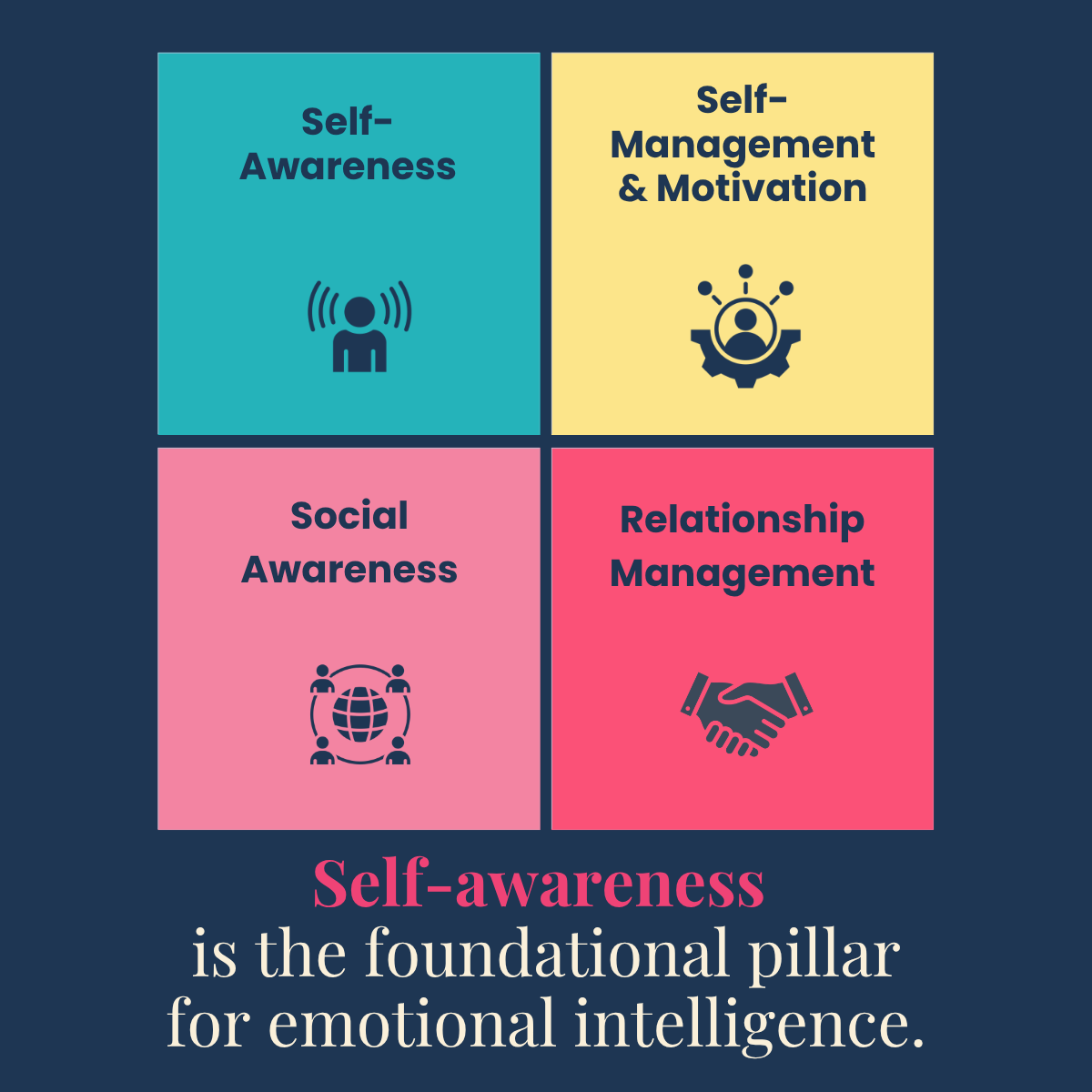
Self-leadership is your ability to lead yourself with clarity and consistency, built on the four pillars of emotional intelligence: self-awareness, self-management and motivation, social awareness, and relationship management.
This article explores each of those emotional intelligence pillars, and how your values in action reinforce your self-leadership.
When your true leadership gets revealed
Direct Sales runs on momentum. In the months where volume is climbing and the team is buzzing, leading feels easy. You show up, you celebrate - happy days for everyone!
What happens in the harder months? When sales are softer than you'd like, follow ups go unanswered, growth slows and the pressure builds. Under that pressure you might notice yourself pulling back and going quiet. Or swinging the other way, managing every detail in an attempt to regain control.
These are the months that reveal the kind of leader you really are. It is when self-leadership matters most, because how you lead when things are challenging is what your team remember and will be most influenced by.
Why great leadership starts with you
Psychologist Daniel Goleman spent years researching what set outstanding leaders apart, shining the light on the importance of emotional intelligence. Writing in Harvard Business Review in 1998, Goleman reported that when he compared star performers with average ones in senior leadership positions, close to 90% of the difference between them came down to emotional intelligence rather than cognitive ability.
In Direct Sales that insight is potentially even more valuable than it is in other industries, because Direct Sales leadership isn't backed by an org chart. Nobody has to do what you say. Your influence rests entirely on whether people want to follow you, and that is impacted by the self-leadership they observe in you.
Great leadership of others starts with great self-leadership.
The four domains
Self-leadership is built on the four domains of emotional intelligence, starting with self-awareness as the essential foundation for every other factor to grow from.
 1. Self-awareness
Self-awareness is understanding what you're feeling and why, and recognising how that shapes your judgement and your impulse to act.
Leaders with strong self-awareness recognise their triggers. They understand how their mood and feelings can shape what they pay attention to, what they say and how they behave.
Most of us assume we're self-aware.
Organisational psychologist Tasha Eurich ran a research programme spanning several years and thousands of participants, and found that while around 95% of people believe they are self-aware, only an estimated 10 to 15% actually were. Eurich also found that seniority works against us, because the more senior we become, the less candid the feedback we receive.
Why the gap? Because self-awareness has two components - internal, and external.
🪞 Internal self-awareness is how clearly you see your own values, patterns and reactions.
🔎 External self-awareness is how accurately you understand the way other people actually experience you. This differs from simply reflecting on other people's responses to you - you can be thoroughly reflective and still have no idea how you actually landed with someone.
This article, and Thrive's Self-Leadership Snapshot, focus on internal self-awareness because that's where self-leadership starts and the component you can begin on your own, before enlisting support to build external self-awareness.
Self-awareness is the foundation of self-leadership, because you can't manage what you haven't noticed. Your team takes its cues from you, and when you're aware of your own state you get to choose your response instead of letting your mood choose it for you.
2. Self-management and motivation
Once you're aware of an emotion, self-management is your ability to regulate it and its potential impact. That applies to the uncomfortable emotions and the exhilarating ones, because both shape your thoughts, behaviours and actions.
Self-management and motivation also encompasses how you adapt when plans change, when you encounter challenge after challenge or the goal you're working towards seems further and further away.
Leaders with strong self-management still feel the full gamut of emotions. They still experience the disappointment of lower results, or the frustration of slow progress. Their self-management however supports them to choose their response rather than react, conscious of the impact for themselves personally and for how it affects others.
3. Social awareness
Ever been in a meeting where one person dominates the conversation, seemingly oblivious to others trying to speak and share their opinion? Or potentially been a part of a fractured team where a Leader is blissfully unaware of the tension and disharmony?
Social awareness is your ability to read what's happening for the people around you. To notice team dynamics, to listen properly to people - observing not just what is spoken but also what isn't, and to understand another perspective rather than waiting for your turn to speak.
At the heart of social awareness is empathy - the ability to step into someone else's shoes and see the situation from where they're standing.
Socially aware Leaders pick up the emotional currents in a team before those currents turn into problems. Their people feel seen and heard, and together foster a culture of psychological safety.
4. Relationship management
Every Direct Sales Leader knows the particular discomfort of needing to have a hard conversation with someone who is also a friend. You rehearse the conversation before making the phone call, but then don't follow through. Or you allow a standard to slide with one person because you're concerned raising it will cost you the friendship.
Relationship management is how you guide, support and connect with people, and it's what determines whether that conversation strengthens the relationship or avoids it. It shows up in your communication, in your ability to give feedback, in the recognition you offer and the way you celebrate progress. Strong relationship management allows you to disagree, to challenge, to debate, without damaging the relationship because of the trust and culture you've established.
Relationship management is also where the depth of your internal work becomes visible and experienced in action by your team.

Your values as evidence of self-leadership
I recently worked with a Direct Sales Leader who saw the impact of self-leadership play out - let's call her Jane. She'd been asked to bend the rules when signing a new team member. Jane said no, and explained why the standard her team met mattered more than the promotion. Considerable drama followed.
She was disappointed in how some people responded, and yet didn't allow that disappointment to impact her behaviour. She deepened her self-awareness and self-management practices, being aware continuously of how she responded, of remaining steady and calm.
Jane held her ground, because acting with integrity was one of her core values.
Bill Bernbach, who co-founded the advertising agency Doyle Dane Bernbach, made this point better than anyone. After the 1964 Surgeon General's report on smoking, he decided his agency would not take cigarette accounts, which at the time was some of the most profitable work in advertising. Asked about it by the Los Angeles Times years later, he said he didn't feel a principle was a principle until it cost you money.
Values work the same way. How you show up when alignment gets expensive is the real measure of your self-leadership.
This is why when I work on values with a Leader through coaching, or our Amplify Leadership Journey, we don't write values as nouns. We write them as verbs. "Connection" might be the top value for you and for five other Leaders in your organisation, and each of you would mean something different by it. Turning the word into an action is what shows you what it looks like when you're genuinely doing it.
- Integrity becomes explaining my reasoning, even when the answer disappoints someone.
- Excellence becomes sending it back when it's nearly right.
- Respect becomes saying the difficult thing to the person, before I say it about them.
Knowing what integrity looked like in practice is what gave Jane the strength to say no. Not only does she know what her values look like in action, her team does also - and can now follow her lead.
Values as verbs become practical guidance rather than words on a wall, and evidence of your self-leadership.
The Thriving Take Away
Self-leadership isn't reserved for people with a title - it's an essential skill for everyone. It starts with noticing what you're feeling and why, then choosing your response - based on the impact of those feelings, your reactions and your values.
Your values become real in the moments they cost you something. This is when it matters to strengthen your ability to manage yourself, to read the people around you and their responses and build trust and relationship, even in times of challenge. Acting in accordance with your values might cost you money, but the self-leadership you strengthen is priceless.
The outcomes you desire - whether for yourself personally or for your team - are created by what you think, what you say and the steps you take every day. It all starts with you.
What's Next?

Understanding the elements of self-leadership is where you start, supported by the next step of exploring we where you sit across them. This then allows you to start making a difference - to yourself, and others.
To support that discovery process, we've put together the Self-Leadership Snapshot, a free reflection resource that walks you through each self-leadership pillar with questions to consider and a practical tool for developing the areas you'd like to strengthen.
There's a version for Leaders, one for Sellers and one for everyday life.
Download your Self-Leadership Snapshot and discover which pillars are already working for you, and where a little focused attention could make a big difference.
Frequently asked questions
What is self-leadership?
Self-leadership is the ability to lead yourself with clarity and consistency, so that others can follow you with confidence. It covers understanding your own emotions and patterns, regulating your responses, staying connected to your purpose and values, and choosing your behaviour deliberately rather than reacting automatically. It's generally considered a prerequisite to leading other people well.
Why does self-leadership matter for Direct Sales leaders?
In Direct Sales, your team members choose to follow you - there's no reporting line compelling them. That makes your influence even more important - in both times of celebration and of challenge.
What are the four domains of emotional intelligence?
Self-awareness (knowing what you feel and why), self-management and motivation (regulating your emotions and maintaining forward momentum), social awareness (reading and understanding others), and relationship management (building trust and positively influencing people). The model comes from psychologist Daniel Goleman's work on emotional intelligence, first popularised in his 1995 book Emotional Intelligence, and later refined into the four domains referenced above by Goleman, Richard Boyatzis and Annie McKee in Primal Leadership (2002).
Can emotional intelligence be improved, or are you born with it?
It can be developed. Daniel Goleman has consistently described emotional intelligence as learnable, and able to be strengthened with time and commitment.
SOURCES
- Goleman, Daniel; What Makes a Leader?, Harvard Business Review, 1998
- Goleman, Daniel; Emotional Intelligence: Why It Can Matter More Than IQ, 1995
- Goleman, Daniel; Boyatzis, Richard; McKee, Annie; Primal Leadership: Realizing the Power of Emotional Intelligence, Harvard Business School Press, 2002
- Eurich, Tasha; Working with People Who Aren't Self-Aware, Harvard Business Review, 2018
- Eurich, Tasha; What Self-Awareness Really Is (and How to Cultivate It), Harvard Business Review, 2018
- Bernbach, William; quoted in Los Angeles Times, 11 January 1971